
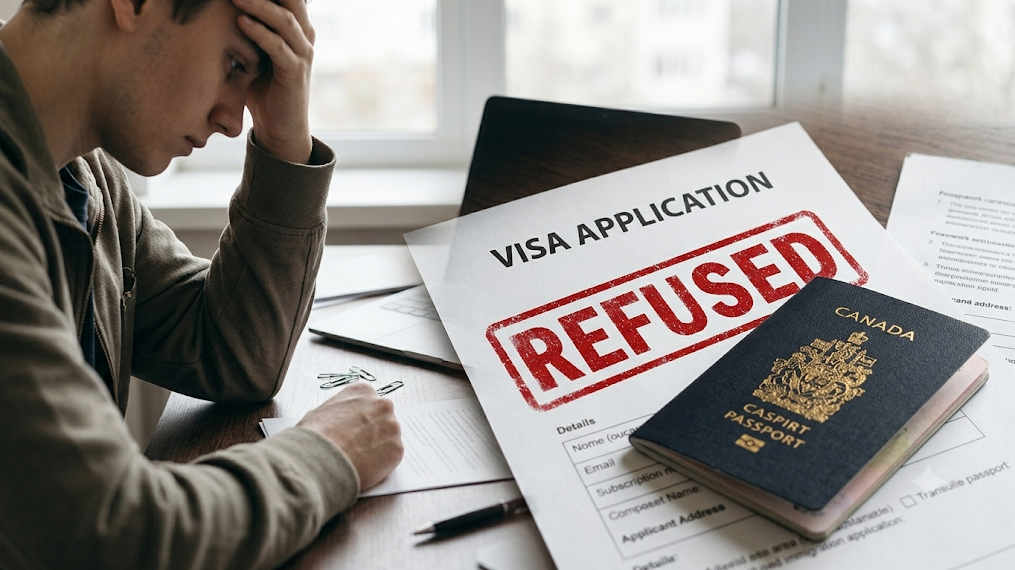
A refusal is not always the end. Depending on your application type, you may be able to respond to a procedural fairness letter, ask IRCC to reconsider, appeal to the Immigration Appeal Division (IAD), apply for judicial review at the Federal Court, or reapply with a stronger file. The right option depends on why your immigration application refused, and some deadlines are as short as 15 days, so act quickly.
If your immigration application was refused in Canada or from abroad, it is normal to feel shocked, embarrassed or scared. Please take a breath. Many people who receive a refusal go on to succeed. At Visarete, our Oshawa-based team helps clients across Canada understand a refusal letter and choose their next step calmly and clearly.
First, Check: Have You Actually Been Refused?
Before anything else, read your letter carefully. Three different documents can look alarming.
- Procedural fairness letter (PFL): The officer has a concern and is giving you a chance to answer before deciding. You have not been refused yet.
- Request for additional documents: IRCC wants more evidence. Respond fully and on time.
- Refusal letter: A final decision has been made. The rest of this guide applies.
Also note the date on the letter and how you received it, because many deadlines start from that point.
Procedural Fairness Letter Response: Your Best Chance to Turn Things Around
A procedural fairness letter response can change the outcome. A PFL means an officer sees a problem, such as doubts about your documents, your relationship, your work experience or your honesty, and wants your explanation first.
How to Respond Well
- Read every concern carefully. Answer each one directly.
- Meet the deadline. A late response may not be considered at all. If you need more time, request an extension before it expires.
- Provide evidence, not just explanations. Add documents, letters, records and clear timelines.
- Be consistent and truthful. Contradictions hurt more than gaps.
- Be extra careful with misrepresentation allegations. A finding can lead to a five-year ban. These letters should be handled with professional help, and in serious cases with a lawyer.
A PFL does not guarantee approval, but a strong, organized reply often makes a real difference.
Common IRCC Refusal Reasons
Understanding IRCC refusal reasons helps you decide whether to challenge or reapply. Typical reasons include:
- Incomplete forms or missing documents
- Insufficient proof of funds or financial ties
- Doubts about a genuine relationship (spousal cases)
- Not meeting program eligibility, such as work experience or language levels
- Inadmissibility concerns, such as criminal or medical issues
- Misrepresentation or inconsistent information
- Purpose of travel or study not clearly established
- Weak ties to your home country (visitor, study and work permit cases)
You can request your officer’s notes, known as GCMS notes, to see how the decision was reached. These notes can take weeks, so request them early, but never let that delay a deadline.
Your Options After a Refusal: Comparison Table
| Option | What It Is | Best For | Typical Deadline | Stops Other Clocks? |
| Reapply | File a new, improved application | Fixable gaps, new evidence, changed circumstances | None, but fixes must be real | N/A |
| Reconsideration request | Ask IRCC to review an obvious error | Clear mistakes, such as an overlooked document | No formal deadline, act fast | No, it does not pause court deadlines |
| Judicial review (Federal Court) | Court reviews the decision’s fairness and reasonableness | Most economic PR, work, study and visitor refusals with legal error | 15 days if decision made in Canada; 60 days if outside Canada | Not applicable |
| IAD appeal | Appeal to the Immigration Appeal Division | Family sponsorship refusals, removal orders, PR residency obligation decisions | Short, often 30 to 60 days depending on the type | Not applicable |
| Refugee Appeal Division (RAD) | Appeal of a refugee claim rejection | Refugee claim refusals | Strict, short deadlines | Not applicable |
| Alternative pathway | Choose a different program | When the original route no longer fits | Varies | N/A |
Deadlines are general guides. Always confirm your exact deadline from your decision letter and official sources.
Immigration Appeal Division: Who Can Appeal?
The Immigration Appeal Division (IAD) is part of the Immigration and Refugee Board of Canada. It does not hear every refusal. In general, it can hear:
- Family class sponsorship refusals, such as spousal or partner sponsorship
- Removal orders against permanent residents and some other people
- Residency obligation decisions against PRs who did not meet the 730-day rule
- Certain decisions about PR status
It generally does not hear refused visitor visas, study permits, work permits or most economic PR applications such as Express Entry. People searching for an IAC appeal Canada are usually looking for the IAD, so use that term when you check official sources.
What the IAD Can Consider
An IAD appeal can look at legal errors, factual errors and, in many cases, humanitarian and compassionate (H&C) reasons. If you win, the IAD can often send the case back or allow it to proceed, which can be a strong outcome.
For help with the family sponsorship side, see our spousal sponsorship services.
Understanding a Removal Order and Your Appeal Rights
A removal order is a serious decision, and people sometimes search for it using terms like “RAP removal order.” If you are a permanent resident or foreign national facing a removal order, you may have the right to appeal, but the deadline is short and strict, and the type of order matters. A removal order can arise from inadmissibility, misrepresentation, criminality or failing the residency obligation.
If you receive one, seek qualified help immediately. Different orders (departure, exclusion and deportation) lead to different consequences and rights. Appeal rights may also depend on your status and the reason for the order.
Judicial Review: Challenging the Decision in Federal Court
Judicial review is the main legal route for many refusals, including most work permit, study permit and economic PR refusals. The Federal Court does not decide your case again. It checks whether the officer’s decision was lawful, reasonable and procedurally fair.
Key points:
- You must first ask the court for leave, and the court decides whether your case can proceed.
- The deadline is 15 days for decisions made in Canada and 60 days for decisions made outside Canada. These are strict.
- A successful review usually sends your file back to IRCC for a new decision. It does not automatically approve you.
- Only lawyers can represent you in Federal Court, so consult an immigration lawyer if this is your path.
You can pursue reconsideration and judicial review together, but reconsideration does not stop the court clock.
Should You Reapply Instead?
Sometimes the fastest, cheapest route is a stronger new application. Reapplying can make sense when:
- The refusal was based on missing or weak evidence you can now fix
- Your situation has changed, for example new job, funds, language results or family ties
- There is no right of appeal
- The original decision does not suggest misrepresentation
Reapplying without fixing the problem often leads to another refusal. Study the reasons first. For example, if you were refused a student visa, our study permit team can review your letter of explanation, proof of funds and study plan before you try again.
Special Cases: Spouses, Workers and Students
Spouse and Family Cases
Relationship refusals are common and emotional. Strong evidence of a real relationship, such as shared finances, communication history, photos and family involvement, matters. If your partner needs to remain in Canada while your file is reviewed, see our spouse open work permit guide.
Work and Study Permit Refusals
There is generally no IAD appeal. Your realistic options are reconsideration, judicial review or a stronger new application.
Express Entry and PNP Refusals
If your PR file was refused, you may need to re-enter the pool or choose a new program. Our Express Entry guide can help you rebuild your strategy.
Mistakes to Avoid After a Refusal
- Missing the deadline. This can end your legal options.
- Reapplying immediately without changes. It often repeats the same result.
- Ignoring misrepresentation risks. Get advice before responding or reapplying.
- Hiring an unregulated “agent.” Only licensed consultants and lawyers can give immigration advice.
- Panicking and sending the wrong documents. Slow down and plan.
Why Choose Visarete When Your Application Is Refused
A refusal is stressful, and you deserve clear guidance. Here is how Visarete supports clients in Oshawa and across Canada.
CICC-Regulated Immigration Consultants
You work with licensed professionals who are accountable for their advice.
Local Oshawa Office, Nationwide Support
Meet in person in Oshawa or online from Durham Region, the GTA or anywhere in Canada.
Careful Refusal Review
We read your letter and notes closely to separate what went wrong from what can be fixed.
Honest Guidance on Next Steps
We tell you whether to respond, reapply, appeal or refer you to an immigration lawyer, for example for Federal Court matters.
Transparent Fees
Clear retainer terms and no surprise charges.
Support From Review to Resubmission
From the first look at your refusal to a stronger file, you have one team beside you.
Frequently Asked Questions: Immigration Application Refused in Canada
1. What can I do if my Canada immigration application is rejected?
You may be able to request reconsideration, reapply, appeal to the IAD (for certain cases) or apply for judicial review. The best option depends on your application type and the reasons given.
2. How long do I have to challenge a refusal?
For judicial review, it is generally 15 days if the decision was made in Canada and 60 days if outside Canada. IAD appeals have their own short deadlines.
3. Can I appeal a refused work permit, study permit or visitor visa?
Generally no, there is no IAD appeal for these. You can request reconsideration, apply for judicial review or reapply.
4. Is a procedural fairness letter the same as a refusal?
No. A PFL means you have not been refused yet and have a chance to respond. Answer it fully and on time.
5. Will a refusal affect my future applications?
A refusal stays on your record and you may need to explain it in future applications. A misrepresentation finding is more serious and can lead to a five-year ban.
6. Can a consultant represent me at the Federal Court?
No. Federal Court matters require a lawyer. A regulated consultant can help with applications, reapplications, PFL responses and some tribunal matters.
7. Should I reapply or challenge the decision?
If the problem is fixable and there is no appeal right, reapplying may be faster. If the officer made a legal error, a challenge may be better. A case review will help you choose.
Get Clear Next Steps With Visarete
A refusal does not define your future in Canada. The sooner you review your letter, the more options you keep. Book a free assessment with Visarete, your trusted immigration consultant in Oshawa, and let us help you decide what to do next.

