
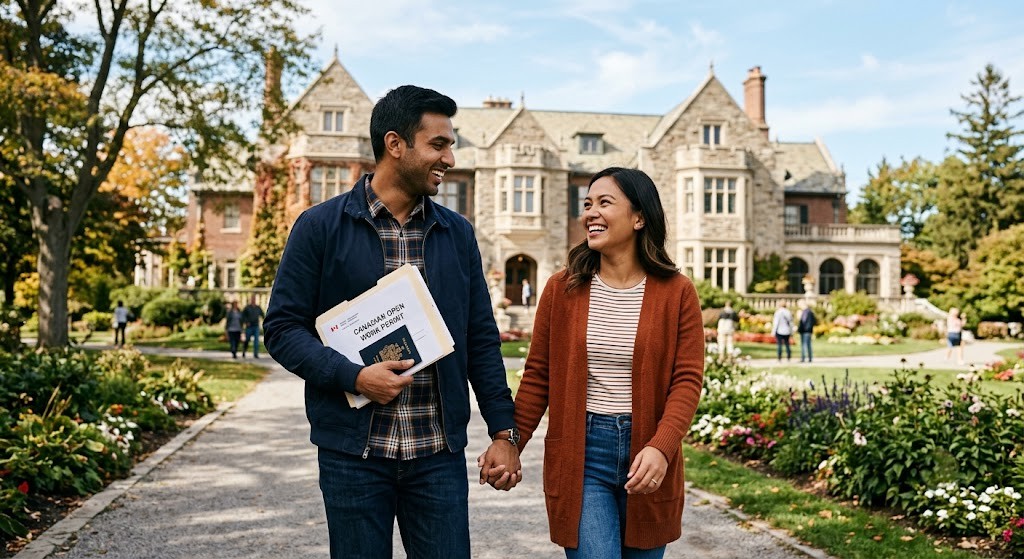
Imagine you’ve just landed in Canada with your partner, or you’re waiting for a sponsorship decision, and the savings account is shrinking every month. The obvious question comes up fast: can my spouse work here? Understanding Spousal Open Work Permit Eligibility is the first step. The answer is often yes, but a spousal open work permit covers more than one situation, and the rules change depending on your immigration status, your partner’s eligibility, and which of the three main routes applies to you.
This guide explains the main routes, who typically qualifies, and the mistakes that cause avoidable delays.
One Name, Several Different Permits
An open work permit lets a person work for almost any employer in Canada, with no job offer and no Labour Market Impact Assessment. When people talk about a spousal open work permit, they usually mean one of three situations:
- The spouse of a Canadian citizen or permanent resident who has applied for sponsorship
- The spouse of a foreign worker holding a qualifying work permit
- The spouse of an international student in an eligible program
Each route has its own conditions. Mixing them up is the single most common reason people apply under the wrong category and lose time. If you’re already deep into the sponsorship process, it helps to read how spousal sponsorship in Oshawa ON works from start to finish, since the work permit often runs alongside it.
Route One: Spouses Waiting On A Sponsorship Application
This is the route most couples ask about. It’s designed for a partner who has a permanent residence application in process and wants to work while waiting.
The usual conditions
Although details shift as policies are updated, applicants are generally expected to meet conditions like these:
- A permanent residence application through spousal sponsorship is in process
- The partner is physically in Canada
- The couple lives together at the same address
- The partner holds valid temporary status, or can restore it in time
- The relationship is genuine, with evidence to support it
The “same address” detail catches people out. If your documents show two different addresses, expect questions. Our guide to the spouse open work permit in Oshawa goes deeper on documents and timing for this route.
Does the sponsorship stream matter?
Many couples believe only inland applicants can get this permit. In recent years, eligibility has depended more on whether your partner is living in Canada with you than on which stream you picked. Still, the stream matters for other reasons, especially appeal rights, which we cover in our article on inland vs outland spousal sponsorship.
Route Two: Spouses Of Temporary Foreign Workers
When your partner holds a work permit in Canada, you may be able to join them and work as well. Eligibility here usually depends on the main worker’s circumstances rather than yours:
- The type and skill level of their occupation
- How much time remains on their work permit
- Whether their employment falls under a program that allows spouses to work
Policies in this area were tightened in recent years, so a rule that worked for a friend two years ago may not apply today. Always confirm the principal worker’s occupation code and permit expiry date before assuming you qualify.
Route Three: Spouses Of International Students
Spouses of students can work in some cases, but not all. Generally, access is limited to certain programs, such as longer graduate-level studies and some professional degrees. Many shorter college programs and undergraduate degrees don’t qualify.
If your partner is studying, it’s worth knowing what comes next for them as well. Graduates often move on to a post graduation work permit in Oshawa, ON, and planning both permits together avoids gaps in status.
Quick Comparison Of The Three Routes
| Factor | Sponsorship Route | Worker’s Spouse | Student’s Spouse |
| Based on | PR application in process | Partner’s work permit | Partner’s study program |
| Job offer needed | No | No | No |
| Main eligibility test | Living in Canada together with valid status | Occupation and remaining permit time | Type of study program |
| Common hurdle | Address mismatches, status gaps | Permit expiring too soon | Program not on eligible list |
| Biggest risk | Weak relationship evidence | Wrong occupation assumption | Assuming all programs qualify |
What Officers Look For In Your Application
Whatever the route, officers want a clear, consistent picture. Strong applications tend to include:
- Proof of relationship, such as a marriage certificate or evidence of common-law cohabitation
- Proof of the principal’s status, including permit, study, or sponsorship documents
- Valid identity and status documents for the applicant
- Consistent addresses and dates across every form
- Medical or biometric steps completed when requested
Small inconsistencies cause big delays. A date typed differently on two forms can trigger a request for more information that adds weeks. Before you submit, run through a proper eligibility check and a document checklist.
Common Mistakes That Cost Couples Time
- Applying under the wrong category because “open work permit” sounds like one thing
- Waiting until status is almost expired before starting
- Submitting weak or thin relationship evidence
- Assuming the rules haven’t changed since a friend applied
- Leaving Canada during processing without checking how that affects the file
A refusal can also affect other parts of your case. If officers doubt the relationship on the work permit, similar doubts can follow your permanent residence file, so a careful first submission matters.
What To Do If Your Spouse Doesn’t Qualify
Not qualifying isn’t the end of the road. Depending on your situation, other options might include an employer-specific work permit, a study permit of their own, or a different pathway to permanent residence. Some couples explore points-based immigration, and our overview of Express Entry Oshawa ON explains how that system works. Families who need childcare or home support sometimes explore hiring a caregiver through the LMIA process in Oshawa ON as well.
Getting Local Help
Rules for spousal work permits move often, and small details decide outcomes. Speaking with one of the visa consultants near Oshawa lets you confirm which route applies, which documents to gather, and how to time your application. You can book a consultation with the Visarete team to review your case before you file.
Frequently Asked Questions
1. Can my spouse work while the first application is still being processed?
In many cases, a partner can work under their existing status while waiting, but this depends on the type of status they hold. Confirm this before starting any job.
2. Do I need a job offer for a spousal open work permit?
No. The permit is “open,” meaning it isn’t tied to one employer and doesn’t require a job offer or LMIA.
3. Can my spouse leave Canada while the application is processing?
It can be risky, since re-entry is never guaranteed and travel may affect the application. Check with a professional before making travel plans.
4. Do common-law partners qualify?
Often yes, if the couple can show continuous cohabitation for the required period and meets the same relationship and status conditions.
5. Are children eligible too?
Dependent children may qualify in some situations, depending on the route and their own status. Eligibility varies, so check current rules.
6. How long does the permit last?
Duration depends on the route and the principal’s permit or application. Many are issued for a set initial period and may be extended while a PR application is pending.
7. What happens if the application is refused?
You’ll receive reasons for the refusal. Depending on the cause, you might fix the issue and reapply, or seek advice on a different route. A refusal can also affect related files, so don’t ignore it.
8. Is a medical exam required?
Sometimes. It depends on factors like how long the applicant has lived in certain countries and the type of work planned. The instructions in your application will say if one is needed.

